

Today we are discussing what car modifications that can cause an MOT Failure.
A car owner may choose to modify their car in order to improve its appearance or sound.
There are more popular modifications that motorists like to do like; have louder speakers for their stereo or put tinted windows to stop the glare of the sun.
However, despite the attractiveness of some car modifications, not all meet legal requirements.
An illegal modification might result in your vehicle failing an MOT or potentially resulting in an on-the-spot penalty.
One of the most common reasons for a car to fail its MOT is due to modifications.
If your car has been modified in any way, it could be deemed unsafe and fail its MOT.
Some of the most common modifications that can cause an MOT failure include:
- Changing the suspension or wheels
- Adding aftermarket exhausts or intakes
- Upgrading the engine
- Adding aftermarket body kits or spoilers
If you have made any of these modifications to your car, it is important to have them reversed before taking your car in for its MOT.
Otherwise, you are likely to fail the test and be required to make expensive repairs.
In addition to car modifications, simple car accessories can also cause an MOT failure, as well as possible fines.
Simple Accessories that can cause an MOT failure:
According to the most recent DVSA data, over 7 million automobiles fail their MOT each year, suggesting that it may not always be due to major vehicle issues.
A simple accessory might result in an MOT failure as well as a fine of up to £2.5k.
A study has revealed that 8% of MOT failures are due to problems with the drivers view to the road, which may be a costly mistake.
Dashcams with sat-navs, as well as dream catchers stuck in the wrong place, can cause an MOT failure.
A £1,000 fine may be levied if you are caught driving without an MOT. Even if your vehicle passes the test, you can still be fined £2,500 if it is considered to be unsafe.
Furthermore, you may get three points on your license and if you have been convicted of driving a vehicle in an unsafe condition in the previous three years, you could be banned from driving for at least six months.
Do I have to declare modifications to my car?
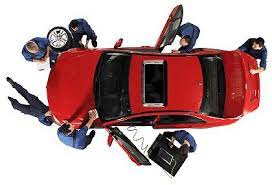
Yes, you are required to declare all modifications to your car when taking it in for its MOT. This is so the testers can properly assess the safety of your car and determine if it meets all the necessary criteria.
If you fail to declare any modifications, you could be risking a serious accident or even voiding your insurance.
Who do i have to declare the modifications to?
You will need to declare the modifications to the person who is conducting the MOT test.
This could be the mechanic at your local garage or the testing centre itself.
You may also need to provide proof of the modifications, so it is important to keep any receipts or documentation you have.
What if my car fails its MOT because of modifications?

If your car fails its MOT because of modifications, you will need to have the modifications reversed or removed.
You may also be required to make repairs to any other parts of your car that were affected by the modifications.
This can be expensive and time-consuming, so it is always best to avoid making any changes to your car that could impact its MOT.
Can i make modifications to my car myself?
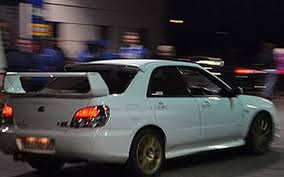
Yes, you can make modifications to your car yourself, but it is important to be aware of the risks involved.
If you are not knowledgeable about cars, it is easy to make changes that could impact the safety of your car and cause it to fail its MOT.
It is always best to consult with a professional before making any changes to your car.
What are the risks of not declaring any modifications made to my car?
If you do not declare any modifications made to your car, you could be putting yourself and others at risk.
The testers will not be able to assess the safety of your car properly and this could lead to accidents or even voiding your insurance.
It is always best to be upfront about any changes you have made to your car.
Visibility

Firstly, taking into account that studies show that 8% of MOT failures are caused by issues affecting the driver’s view of the road. It’s important to make sure that the wipers are working properly and can squirt the washer fluid onto the windscreen, and ensure that the screen-wash is topped up.
Secondly, ensure that there are no cracks in the windscreen within the range of the wiper blades. For example; if there is a 40mm crack on the passenger side this is classed as an MOT fail. On the drivers side a 10mm crack can also fail the MOT.
Finally, if there is anything else obscuring the driver’s view, like a dreamcatcher, or a dashcam, sat-nav, or any object obscuring the rear windscreen, can fail an MOT.
Lowering your suspension
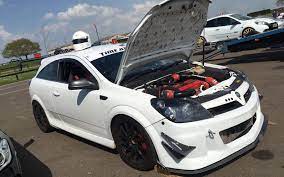
Lowering the suspension on your car is not necessarily illegal, but it may attract the attention of the local police.
The front and rear suspension on a vehicle with lowered suspension must be able to steer accurately and the headlights should be at least 50cm from the ground at the lowest point of the light (at least 50cm from the ground at the lowest point of the light).
Flashing lighting
Only white lights may be placed in the front of the vehicle and red ones at the rear.
Blue lighting and flashing lighting are not permitted as it reduces light output and may be confused with an emergency vehicle.
However, you may add neon lights underneath your car, provided that they aren’t immediately visible.
Furthermore, many vehicles are now sold with footwell lights. Having this type of lighting in your vehicle is not an issue, as long as it doesn’t distract the driver.
Spoilers
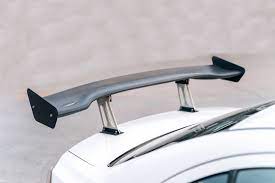
Spoilers aren’t illegal, however if they are not securely fitted, have sharp edges, or even obstruct the driver’s view, they may be considered unlawful and lead to an MOT fail.
Tinted windows
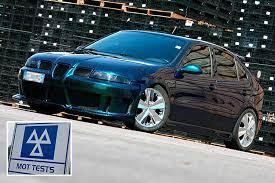
The windshield of your vehicle must allow in 75 percent of the light, while the side windows must enable 70% of the light to enter.
Police have a special instrument for determining how much light goes through a window.
So, it is important to make sure that the tinted windows are at the correct percentage.
Exhaust
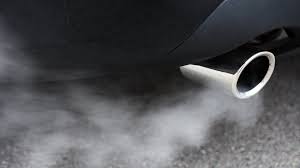
The purpose of an exhaust decat is to replace the automobile’s catalytic converter in the exhaust system. It may enhance performance and make a vehicle noisier, especially when accelerating. As a result, it might be regarded as contributing to noise pollution.
It is against the law to modify or add after-market parts to your car in order to make it louder (following environmental and safety ‘type approval’). If a vehicle is making too much noise, police can issue a £50 on-the-spot fine.
Furthermore, a decat exhaust runs the danger of violating pollution standards (since the catalytic converter has been removed), and it might result in an MOT failure.
It is worthwhile knowing that some drivers remove their decat before getting their MOT to pass. However, police have increased vehicle inspections in response to this practice.
Loud subwoofers
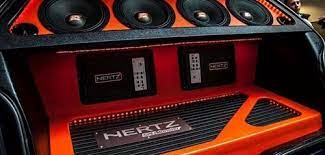
The police can seize a car’s sound system if it produces “alarm, distress, or annoyance” in the general public.
Number plates

It’s possible to put the number plate behind the grille in certain models, such as the Ford Focus St.
However, because it is concealing the number plate, it would be unlawful. Such a combination would result in an MOT failure.
Furthermore, the Police ANPR systems regularly check vehicle number plates for things like lapsed insurance and VED duty, as well as stolen vehicles, so they need to see registration plates clearly.
Tinted registration plates, for the same reason of hiding the number’s readability, are also illegal.
The letters and numbers on the number plate must all be uniform in size, spacing, and typeface. If a vehicle’s number plate doesn’t bear the “BASU” inscription, it does not fulfill the necessary criteria and this can also cause an MOT failure.
Who can carry out MOT Tests?

The majority of vehicle testing is done at commercial garages (licensed examiners) and by certain local governments (designated councils).
VTSs are authorized, or designated as suitable, by DVSA and known as vehicle testing stations (VTSs).
VTSs and their workers are subject to inspection by the DVSA to assure that testing is done correctly.
Only authorized test equipment may be used.
Testers who are specially trained and authorized conduct MOT tests.
They enter test results and sign official test documents on the MOT database.
Only vehicles that are compatible with the testing equipment and have been authorized by VTSs may be tested.
Tests may also be carried out by the DVSA.
Become an MOT Tester

Becoming an MOT tester is simpler than you would believe.
There are several training options to select from.
However, you must first understand what it takes before selecting the best training course for you.
You must have a full UK drivers license of the sort of vehicle you wish to test for the class of tests in order to be an MOT tester.
You also have to have at least four years full time working experience in the service and repair of the vehicles you want to test, as well as a level 3 qualification.
Moreover, you need to ensure that you have no unspent criminal conviction of violence, intimidation or convictions in the MOT testing scheme, Motor Trade, and be of a good repute.
MTC offer a range of courses for you to choose from, as well as the Level 3 qualification.
With Hybrid and Electrical Vehicles becoming more and more popular, maybe it is a good time for you to take the training course, as there aren’t many garages that have this qualification at the moment.
We now have an MOT & Hybrid / Electrical Level 1 course available.


