
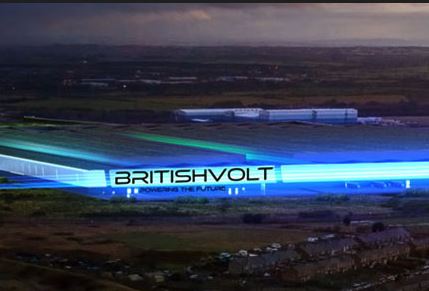
Britishvolt, which would have been one of the first battery manufactures in the UK, has unfortunately collapsed.
The company was co-financed by the Government, and manufactured Electric car batteries in the North East. Unfortunately, it went into administration early this year.
Not only has the UK lost out on this great opportunity, but also lost the opportunity to create more jobs.
What Went Wrong?
There’s a lot of hear say at the moment, where the Government has been blamed for the collapse of Britishvolt. It has also been said that, Brexit played a big part in all of this, due to not being able to meet the trade rules.
They also say that, the company didn’t get the same support from the Conservative Government, to allow them to level up the North East.
They believe that this is because, they don’t see the North East as important for them, as other places in the country.
The Government’ reason for not approving the final grant, is because it is tax payers money and not all the milestones could be met.
As we don’t know exactly what went wrong, we can only say that Britain has missed out on a huge opportunity in manufacturing Electric Car Batteries.
However, the British Government has said that, they will remain committed to Levelling up across the UK. As well as continuing to engage with companies to secure investments. This will ensure that the UK remains a world leader in automotive manufacturing.
What is the Brexit Trade Rules?

At the start of Brexit, they had to discuss many things and make deals.
From 1st January 2022, the new custom rules for trade got put in place.
All traders are to submit a customs declaration for all goods that will be exported from and imported into the UK (excluding Ireland).
Another key point is, when traders submit a customers declaration, they must ensure that the commodity codes are correct. If any commodity codes or recordings are incorrect, this could mean that you have paid the wrong amount of tax or duty charges.
Finally, it is advisable to get help from HMRC before hand, to ensure that the goods are classified correctly.
The UK-EU TCA, secures zero tariffs and quotas on goods shipped between the EU and UK, providing those goods meet the rules of origin (RoO).
For traders to benefit from the TCA zero tariff, businesses must show the origin of their goods.
Meaning; The goods will only qualify, if it is wholly obtained in the UK and EU, or been substantially transformed in one or both markets.
If this is not the case, then you will likely face tariffs.
Moreover, there are some businesses that can’t, or that don’t want to claim the zero tariff because of the complexity, or the cost of the paperwork.
Furthermore, you can check on the HMRC website for the UK Tariff Duties and VAT rates.
For more information about the Customs Duty for Trade, go to the Governments website.
What are Solid State Batteries?

This type of battery uses solid electrodes and electrolytes, instead of the liquid ones used in traditional batteries.
Solid State batteries have many advantages, as they have higher energy density, faster charging times and a longer life span.
Generally, these batteries are more safer than traditional batteries. This is because, they are not only less likely to catch fire, but also less likely to explode.
In some Electric Vehicles, they use these batteries and are expected to grow in the future.
What is the Difference Between Solid State Batteries and Lithium-Ion Batteries?
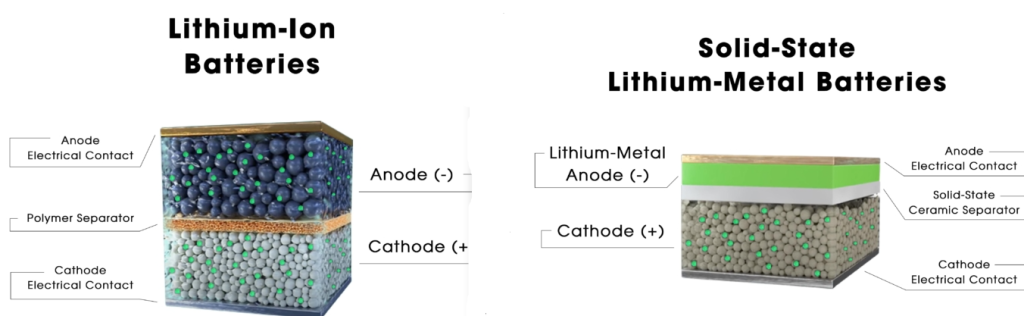
Lithium-Ion batteries contain two electrodes, that are compounds which accepts the incorporation of Lithium Ions into their structure.
The cathode is a positive terminal, which is made of cathodic material and is the current collector.
Whereas the anode, is the negative pole of the battery, which is made of anodic material and is the current collector.
The central separator, is a thin layer of plastic polymer, which is a mechanical separator between the anode and cathode and acts as an insulator. The central separator, is located in between the anode and the cathode.
An electrolyte, fills all of the cell’s volume with an organic liquid, which contains a lithium salt. This allows the lithium Ions to flow, by acting as a link between the cathode and anode.
The contemporary Lithium-Ion Battery separator, only serves as insulation.
Furthermore, it is entirely immersed in the liquid electrolyte, that submerges everything within the cell.
It then becomes a true medium, which allows the lithium Ions flow between the cathode and anode. The anode then composes into a graphite structure.
On the other hand, the internal structure of a Solid-State Cell is completely different, because all of the components are solid.
In traditional Lithium Batteries, the electrolyte is a liquid. This is not like solid-state cells, which are made up of a cathode, separator and anode.
Will Solid State Batteries be available on the Electric market?
This is a good question!
Solid State Batteries are not entirely new and Smartphones and Laptops currently use these batteries.
Furthermore, you can also find them in vehicles such as buses. This is due to the intense usage.
Solid-State Batteries for the automotive industry are still in their early stages. As there are many hurdles yet remaining, before they can be mass produced.
Moreover, a lot of manufacturers in the automotive industry have taken an interest in these batteries, such as; Mercedes-Benz and Toyota.
For more articles like this one; Are Lithium Sulphur Batteries the next big thing?
Want to know more about EV’s?

Here at MTC, we offer a variety of courses that can give you the information you need about Electric and Hybrid Vehicles.
Hybrid Training Course, Level 1 – Raise Awareness
Hybrid/ EV Training Course, Level 2 – Light Vehicles
Level 2, Buses, Hybrid Training Course
Hybrid Training Course, Level 2 – HGV’s
Hybrid Training Course Level 3 – Cars
The Level 1 Hybrid and Electric Training Course, is to raise awareness of Hybrid and Electric Vehicles. This course is aimed at anyone that may come into contact with Hybrid and Electric Vehicles.
Level 2 Hybrid and Electric Light Vehicle Training Course, Level 2 HGV Training Course and Level 2 Buses Training Course. The Level 2 course is aimed at mechanics and car valeters.
The Level 3 Hybrid and Electric Training Course, is aimed at technicians and mechanics.
Information about our Hybrid Courses and what we will cover:
- Safe system shut down and recommissioning.
- Methods of safe component and system test and measurement.
- Using and interpreting vehicle wiring diagrams & tech data for speedy and efficient repairs.
- Hybrid propulsion and energy generation systems.
- Brush less 3 Phase Motor form and function.
- DC and AC (3 phase) Control Systems.
- Using OEM, Pass-thru and Aftermarket Scan Tools for in vehicle system and component diagnosis.
- How to work safely on hybrid and related vehicle systems.
- How to carry out maintenance and repair activities when working on Hybrid vehicles.
- Construction and function of battery modules and related components
It is anticipated that Level 3 will be the minimum requirement in the future.
Best practice dictates that each technical staff member should be qualified to at least level 2 (service technician).
Diagnostic technicians should be qualified to level 3 (for fault diagnosis and removal, test and refit of high voltage systems).
Our trainers are experienced in the field and can provide you with all the knowledge you need.


