
With the Governments ban getting closer and closer, many people have many questions about the upcoming change.
Here are the most frequently asked questions.
What should I do?
Many vehicle owners are unsure what to do, especially with the ban date getting closer. There is no simple answer to this question.
It all depends on the owners, as there are many factors to consider before making any changes.
The factors that should be taken into consideration are; the cost of these new high tech EV’s.
EV’s can be quite expensive, and there are many to choose from. Another factor to consider is the distance you travel on a daily basis, as you will need to consider how you will charge your EV. Will you charge it at your home and get a home charger installed? Or will you use the local charging points? All these factors need to be considered before making the change.
You may want to keep your petrol or diesel vehicle, because you don’t have the budget to buy an EV and your worried about the clean air zone ban. If this is the case, then remember that the second-hand market is also a good option.
Can I still drive my Petrol or Diesel Vehicle after 2030?
The answer to this question is, yes you can!
The zero emissions ban, only applies to the sales of new petrol and diesel vehicles. At the moment, there is no current plans to ban the use or sale of second-hand vehicles. So, there is no need to worry at the moment.
Can I charge an EV abroad?

Charging an EV abroad, depends on what type of EV you are driving. As abroad, there may not be as many charging points like the UK. For example; in France, EV’s have become more popular over the past years, and trying to find charging points, can still prove to be difficult when travelling abroad with your EV .
Another thing to keep in mind, is to make sure your plug in adapter is compatible, as the foreign socket maybe different from in your own country!
It’s always a good idea, to check where the nearest charging points are in the foreign country you are going to.
Cars affected by the UK 2030 Petrol and Diesel Ban
The Government, has set to ban all new petrol and diesel cars and vans, from being sold in the UK in 2030.
The new Hybrids and Plug-In Hybrids will be allowed until 2035, as long as they are capable of meeting the Governments requirements, which has yet to be defined.
The Governments plan, is to only allow pure Electric or Hydrogen-Powered Cars, to be sold after 2035. It has been said that, petrol and diesel cars, and conventional Hybrids, will be allowed to be sold and bought on the market after 2030 and 2035.
What is the transition of Electric Vehicles?
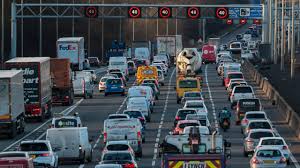
The Government has invested £1.3 billion, in order to help facilitate the transition, away from fossil-fuel cars in the UK.
The £1.3 billion, is being used for EV charging points for homes, motorways and on the streets, across the UK.
They also set aside £582 million, to help EV and PHEV owners and businesses by giving them grants.
The UK Government, is also investing money into developing batteries and mass production, along with more money for nuclear power plants. This is to help with the high demand for electricity, due to the growth of EV’s.
The plan for the Government, is to try and get a greener future and get a net zero by 2050.
Figures show, that 23 per cent of new registrations were EVs and PHEVs, last year (2022).
Many companies of the motor manufacturing business, that sell petrol and diesel vehicles are extremely concerned, as the ban is getting closer.
The UK cities, have already started making changes to have clean-air zones. For example; London charge a daily charge of £12.50, for petrol and diesel cars that drive in the capital. Furthermore, there is also the congestion charge that drivers have to pay. This is to make the capital not have so much contamination.
Where are the Electric Charging Points in the UK?
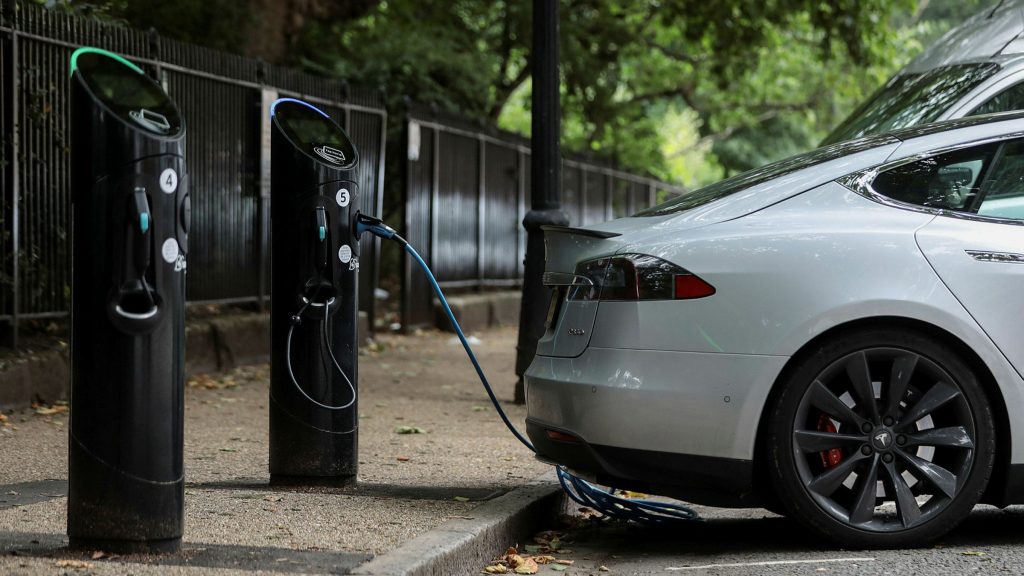
Across the UK, there are now over 6,000 EV charging points, so finding a place to charge your EV shouldn’t be a problem.
With EV’s becoming increasingly more common, there are more locations offering, either fast or slow charging facilities.
If you want to look for a charger near you, the best place to start is Zap-Map. The Zap-Map website, has a comprehensive map of all the charging points across the UK, as well as information on each one.
All you need to do, is enter your postcode or town name, and the locator will show you all of the nearby charging points. Also, their availability and whether they are free or paid.
The slow charging points, are mainly found in places like, car parks and residential areas, while fast and rapid chargers, are more likely to be located near motorways and other high-traffic areas.
Furthermore, there are also a number of private companies, who have their own fast charging networks.
Want more knowledge about EV’s or Hybrid’s?

Here at MTC, we offer a variety of courses that can give you the information you need about electric and hybrid vehicles.
Hybrid Training Course, Level 1 – Raise Awareness
Hybrid/ EV Training Course, Level 2 – Light Vehicles
Buses, Hybrid Training Course, Level 2 – Buses
Hybrid Training Course, Level 2 – HGV’s
Hybrid Training Course Level 3 – Cars
The Level 1 Hybrid and Electric Training Course, is to raise awareness of Hybrid and Electric Vehicles.
This course is aimed at anyone that may come into contact with Hybrid and Electric Vehicles.
Level 2 Hybrid and Electric Light Vehicle Training Course, Level 2 HGV Training Course and Level 2 Buses Training Course. The Level 2 course is aimed at mechanics and car valeters.
The Level 3 Hybrid and Electric Training Course, is aimed at technicians and mechanics.
Our experienced trainers in the field and can provide you with all the knowledge you need.
For more information on our EV and Hybrid training courses, get in touch with us today by calling 01274 965008.


